

Emilia Nessuno correctly diagnoses self-referentiality as the failure of Protestant worship music. She seeks art that carries attention beyond itself to God. I quite agree, but her prescribed cure derives from a false dichotomy: vague religious sentiment or vivid self-expression. The third way of historic Christian aesthetics is neither thought nor mentioned by Nessuno. This inattention reveals a great theological loss at the root of the Reformation. Nessuno is an emblem of the modernist difficulties that beset Protestants today.
Nessuno Wants What’s Missing From Protestantism
Nessuno wants Christian worship to imitate the specificity of secular pop music and pop art. She presents Taylor Swift as an exemplar Christians should imitate.
Paradoxically, the more general the art, the less we can identify with it and be taken by it, because the universals of human experience come not by generality but exactly through the particular. Secular songwriters understand this in a way we Christians seem to have forgotten (pay attention to any Taylor Swift lyric and notice just how specific and imagistic it is—and then notice how many different kinds of people are able to call her music relatable).
When Nessuno says “specific and imagistic,” she means the lyric works through pictures the mind can render as sensible objects. Instead of speaking about abstract categories, she says to render specific things: a real scarf left at a sister's house rather than "a memento," standing in a refrigerator light at 2 AM rather than "feeling lonely late at night," a named street, a dated season, an exact gesture. The detail belongs to one person's singular situation and could not belong to just anyone's. That’s the specificity she wants. Instead of talking about ideas and feelings, the author says we should sing of things we can make visible. “I left my scarf there” is an image. “I miss what we had” is a summary. The image shows something we can imagine happening. The emotion arrives as an inference or empathetic response to the picture. It is not stated.
Nessuno has a point. Often, writers hope to appeal to a wider audience by being more general. Nessuno claims this fails. Generality gives the imagination nothing to work on. The reader or listener stays at the level of the words and never penetrates to the things beyond the words.
All of that is true, but the Taylor Swift example exposes a great loss in the theology of the image at the Reformation. Nessuno wants images that function as windows. She wants art that doesn’t draw attention to itself but guides our minds to God. Protestant theology and Reformed iconoclasm retained no doctrine explaining how an image can do this.
Lacking a tradition, Nessuno must assemble her aesthetics from a neuroscientist, two modern thinkers (a non-christian psychiatrist and an unbaptized philosopher), and a sexualized pop star.
Nessuno doesn’t mention any christian aesthetic tradition, presumably because she believes there isn’t one. But there is a robust aesthetic tradition in historical Christianity that has much to say, both for and against Nessuno’s modernist principles.
Historical Christian Aesthetics
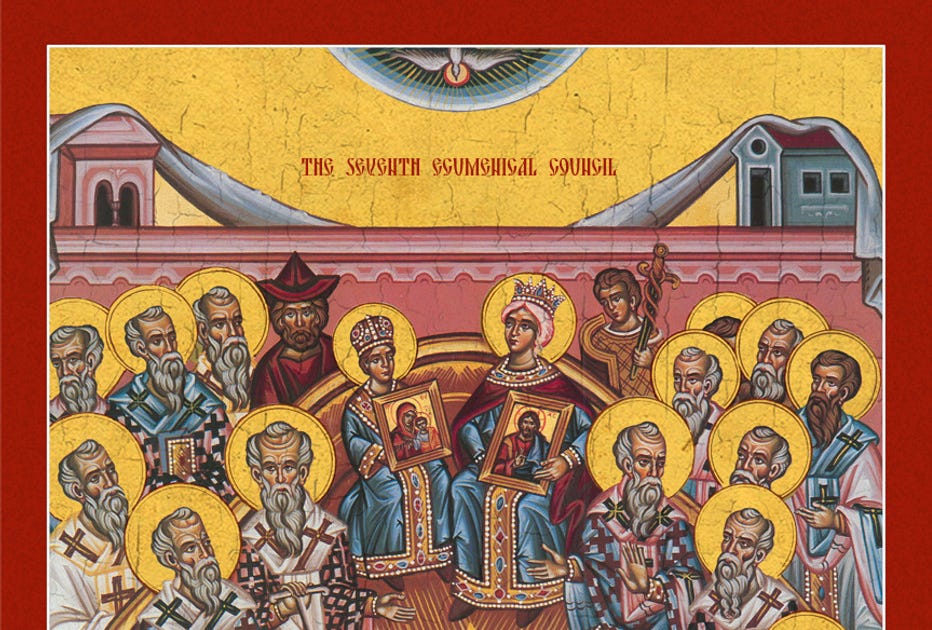
Twelve centuries before Nessuno’s philosophers and pop stars, the Seventh Ecumenical Council in 787 AD already answered her questions dogmatically. The council defined an image (εἰκών), as a visible representation of a person or sacred reality. An icon of Christ, the Theotokos, and angel, a saint. A prototype (πρωτότυπον) means the original person or reality of which the image is a representation. Christ is the prototype of an image of Christ. The Archangel Gabriel is the prototype of an image of Gabriel.
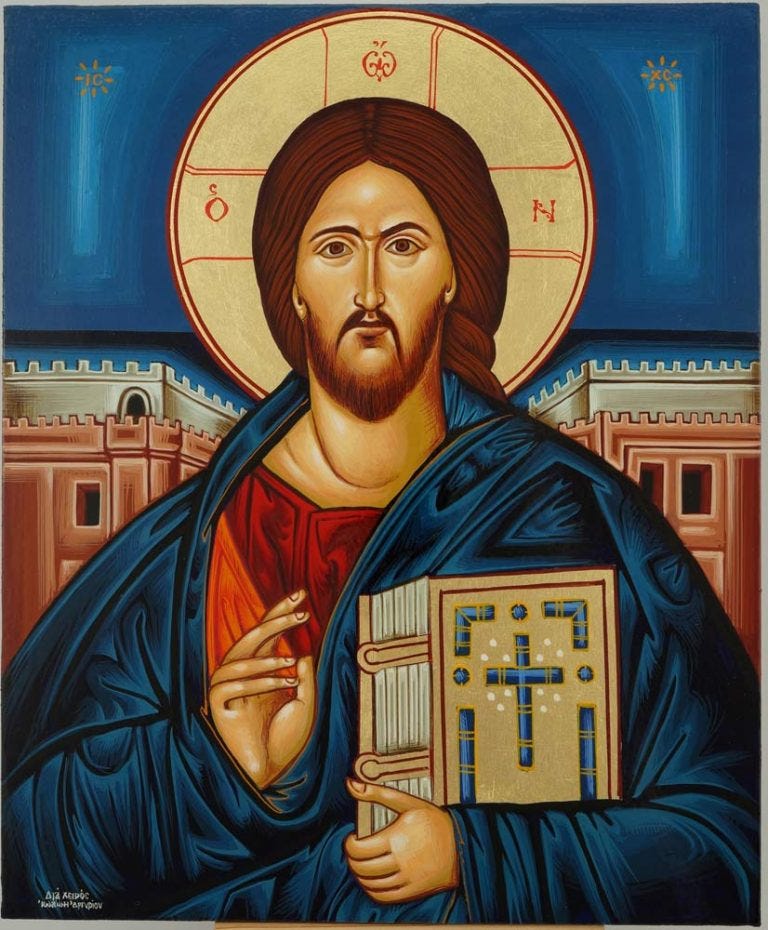
The Seventh Ecumenical Council formulated this dogma: the honor shown to the image passes to the prototype. The image is distinct from the prototype in substance but is related to it by representation, likeness, and name. The council rejected the iconoclast argument. Veneration of an image does not terminate in the material image as such, but in the person represented by it.
Nessuno’s submersion in Reformation iconoclasm has severed her from this doctrine. She along with the Protestant world. Lacking any aesthetic tradition, she defaults to the only image culture available: the commercial entertainment industry. Nessuno’s reach for Taylor Swift is therefore not an eccentric choice. It’s the inevitable Protestant choice. The marketplace is the only living school of aesthetic craft that’s left to her by the Reformation.
Indeed, her own example of a proper hym confirms this, Be Thou My Vision.
Be Thou my Vision, O Lord of my heart;
Naught be all else to me, save that Thou art
Thou my best Thought, by day or by night,
Waking or sleeping, Thy presence my light.

Be Thou my Wisdom, and Thou my true Word;
I ever with Thee and Thou with me, Lord;
Thou my great Father, I Thy true son;
Thou in me dwelling, and I with Thee one.

Be Thou my battle Shield, Sword for the fight;
Be Thou my Dignity, Thou my Delight;
Thou my soul’s Shelter, Thou my high Tower:
Raise Thou me heavenward, O Power of my power....
This beautiful hym is an eighth century Irish monastic prayer from a church in full communion with the historic Orthodox Church. The one hym that works for her is an artifact of the historical Christianity that Nessuno’s Evangelical Protestantism abandoned.
The aesthetic impoverishment Nessuno wants to fix is a structural feature of her theology. She perceives the problem correctly, but her modernist religious tradition gives her no vocabulary for what she perceives. She is forced to rely on divided brain hypotheses from a psychiatrist rather than the theology of the Incarnation.
Modernist Errors
It’s understandable. With no ecclesial doctrine of the image, Nessuno builds her aesthetic cure from what’s at hand in popular culture: expressive individualist craft, imaginative vividness, and relatability. These modernist nostrums are really presuppositions in disguise. They reproduce the artistic disease Nessuno is trying to cure.
Error: worship as art. Like most Protestants, Nessuno conceives worship as an expressive artifact produced by individual talent. If worship were individual expression, it would be right to evaluate it by the aesthetic affect on the audience. And indeed, this is how Protestants understand and react to worship.
This is a modernist error, though. Worship is liturgical not artistic. Divine Liturgy is a form of worship that was received not invented by individual talent. Christ instituted the Divine Liturgy. It’s genealogy runs from Jewish Temple worship, to Synagogue worship, to Passover, to the Last Supper, to the Eucharistic Assemblies of the Apostles. The Apocalypse 4-5 of the Apostle John shows the heavenly worship service centered on the throne of God and the Lamb. The Divine Liturgy is divine precisely because it is the worship service in heaven. The artistic standards of individual expression are grossly inapplicable to revealed mysteries like the Divine Liturgy.
Error: faulty anthropology. Nessuno, again as emblematic of Protestantism itself, makes the imagination the way of communion with God. She praises lyrics that give the the mind concrete and lively images.
The long Christian tradition through the Holy Fathers, and especially the Desert Fathers, teaches that self-generated imaginative experiences in prayer are the fiery road to prelest. Cassion tells of the elder Heron, an accomplished ascetic who trusted a vision of an “angel.” Deceived by his own lack of discernment, the demons captured Heron’s imagination. He threw himself into a well and died.
Error: ahistorical aesthetics. The naturalistic vividness Nessuno admires is precisely what the Christian aesthetic tradition refuses. The icon of Christ may not be depicted realistically. Icons use reverse perspective with things father away getting larger not smaller. There is no chiaroscuro of shadow and light.
The holy aesthetic tradition forces one to understand the icon as a window onto the prototype. There is no emotionally moving identification with particulars in the image. It is particular but it is not something the imagination grasps as real.
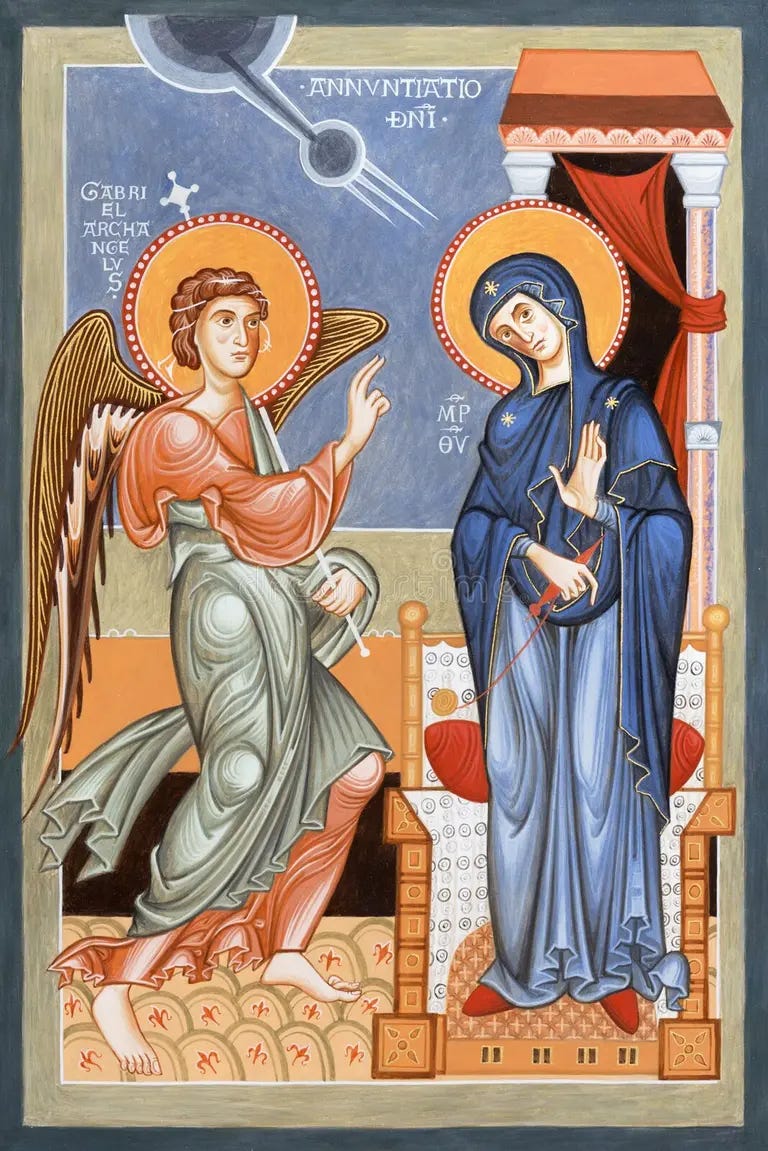
The icon writer makes no attempt at realism. In fact, he eschews it. The icon of Christ is not made to create an imaginatively moving experience. It is made to move your mind to a real person, the prototype: Christ himself, the Theotokos, or other people. The phantasms of the mind can only get in the way of that.
Error: the market as the church. Nessuno praises the specificity and imagistic character of Taylor Swift lyrics. Those lyrics were engineered by marketing experts. Swift’s lyrics are highly optimized for audience identification using Barnum Statements,
a common psychological phenomenon whereby individuals give high accuracy ratings to descriptions of their personality that supposedly are tailored specifically to them, yet which are in fact vague and general enough to apply to a broad range of people.
This is a false specificity in which the audience is tricked into applying their own images to a template. This gives the feeling of specificity and highly imagistic experiences that are more self-created than art-created.
In worship, this would mean each parishioner applying his own imaginative elements to the template provided by the false worship. This would allow each person to leave with a false understanding that feels right because it accords with his own mind. This is very close to the delusion of Elder Heron in the story above. Deceived by his own imagination, he believed the demons.
Error: individualist sociology. Nessuno presumes sacred hymns are composed by individuals for markets. But hymnography that actually achieves her ideal is anonymous. They are allowed in church only after hundreds of hears of vetting for theological soundness.
And the aim of sacred hymns is the opposite of the Nessuno’s imaginative market. The one hymn she approves of was produced under obedience within a canon. It was created in an ascetic tradition that practices self-forgetting not self-actualization. Be Thou My Vision was created by absolutely heroic humility not a multi-million dollar marketing campaign for feel-good female songs.
The root error: expressive individualism. Nessuno, like most all Protestants, and most everyone in Western countries, succumbed to modernist individualism. On that account of man, every act is a vital representation your unique self. Self-referentiality is the whole program of modernity.
If you think about it, this violates the dogmatic formula of the Seventh Council. Modern expressive individualism makes the self both the icon and the prototype, both the image and thing imagined, both performative and performed.
Historic Christianity says you are a living icon. This is precisely what it means to be “made in the image of God.” The icon is not the real thing. It is a representation of the prototype. You were made in the image of God to be a window onto God. In the Christian anthropology, the self is not reverenced but the prototype of the self, God, very much is. Nothing could be further from modern pop music and all its self-loving individualist presumptions.
A Better Aesthetics
Nessuno’s instinct is right. The image must be a passage not a teminus. That goal cannot be satisfied by crafting a better expressive experience. Any song aimed at an audience is still about the audience.
Historical Christian aesthetics is a better way to Nessuno’s goal.
Worship is liturgical not artistic.
Relatability is not a Christian criterion for worship.
Liturgy converts precisely because it is not trying to. It just aims at God.
Christian aesthetics is the reverse of Nessuno’ prescription, of Protestantism’s prescription. It is not christians learning craft from the market.
The Christian church already possesses the most tested doctrine of non-self-referential sacred art in existence. Nessuno’s task as a writer is not compete with Taylor Swift but to enter into that tradition that produced her favorite hymn.